When people hear the words “science” and “astrology”, they often feel confused.
Some think astrology is “against science”. Others say astrology came from science, especially from astronomy, the study of planets and stars.
The truth is more interesting:
Astrology and astronomy were once like twins.
They were born from the same parents: human curiosity and sky watching.
In this section, we will explore:
-
How humans first started observing the sky
-
How astronomy grew as a scientific field
-
How astrology grew as a symbolic system
-
How both share the same astronomy origins
-
Why astrology is not a science, but still meaningful as a symbolic and reflective tool
You will see many real-life analogies, so the concepts become easy to understand, even if you are a complete beginner.
1.1 Why humans started watching the sky
Long before mobile phones, electricity or modern cities, human life was very simple:
-
People lived close to nature.
-
They depended on seasons for farming.
-
They travelled using the Sun, Moon and stars as directions.
Imagine you are living thousands of years ago:
-
No street lights.
-
No TV or internet at night.
-
The sky above you is dark and clean, full of bright stars.
Night after night, year after year, you would naturally start to notice patterns:
-
The Sun rises from the same direction (East) and sets in the other (West).
-
The Moon changes shape over about 29–30 days (new Moon, half Moon, full Moon).
-
Some bright objects (planets) slowly move against the background of stars.
-
Certain star groups (constellations) appear in the sky at the same time every year.
These patterns were not just beautiful. They were practical.
-
Farmers used them to understand when to plant seeds and when to harvest.
-
Sailors used stars to navigate the seas.
-
Priests, kings and leaders watched the sky to decide important dates for rituals or events.
So the first “scientists” were simply careful observers of the sky.
They did something very close to what we now call astronomy.
Real-life analogy:
Imagine you keep a diary of your day. Every evening you write:
What the weather was like
What you did
How you felt
After many months, you might notice patterns:
“In very hot weather, I feel tired.”
“In rainy weather, I feel calm.”
You have just done a simple form of “observation science” in your own life.
Similarly, ancient people were keeping a sky diary. That diary slowly became the base for both astronomy and astrology.
1.2 From sky watching to astronomy and astrology
As people watched the sky more and more, they began to:
-
Measure where the Sun rises on different days
-
Count how many days between full Moons
-
Notice how certain stars or constellations appear during certain seasons
This led to early calendars and early mathematics.
At this point, there was no clear difference between astronomy and astrology. It was one combined activity:
-
Watching the sky
-
Recording patterns
-
Connecting those patterns with events on Earth
For example:
-
If a certain constellation was high in the sky when the rainy season started, people might connect that star pattern with rain.
-
If an eclipse happened and then a king died, people might connect the eclipse with big changes.
Over many generations, these connections became stories, myths and rules.
-
The astronomy side was about where things were and when they moved.
-
The astrology side was about what those movements might mean in human life.
Analogy:
Think of a clock on the wall.
One person looks at the clock and says, “It is 3:00 PM.” That is like astronomy – measurement.
Another person says, “It is 3:00 PM, time to pick up my child from school.” That is like astrology – meaning and action.
Both people use the same clock, but for different reasons.
1.3 What is astronomy? The science side
To understand “astronomy origins explained”, we need to clearly see what astronomy is.
Today, astronomy is a science. That means:
-
It uses observation (looking at things carefully).
-
It uses experiments or repeated measurements.
-
It uses mathematics and physics.
-
It needs evidence and testing.
Astronomers study:
-
The Sun and its structure
-
The Moon and its phases, craters, and motion
-
The planets in our Solar System (like Mercury, Venus, Mars, Jupiter, Saturn, etc.)
-
Stars, galaxies and black holes
-
The expansion of the universe
Modern astronomers use:
-
Telescopes on the ground
-
Space telescopes in orbit
-
Satellites
-
Computer models
-
Data analysis
Their goal is to understand how the universe works, using scientific methods.
Scientific method in simple terms
The scientific method usually follows steps like:
-
Observation – “I see something interesting in the sky.”
-
Question – “Why does this happen? How does it work?”
-
Hypothesis – “Maybe it happens because of X.”
-
Test / Experiment – Collect more data, do calculations, run experiments.
-
Result – Check if the data supports the hypothesis.
-
Revision – If it does not fit, change the idea and test again.
Real-life analogy:
Your phone battery is draining fast.
Observation: “My battery goes from 100% to 0% in 4 hours.”
Question: “Why?”
Hypothesis: “Maybe one app is using too much power.”
Test: You check battery usage.
Result: You see one game using 60% battery.
Revision: You uninstall or limit that app, and the battery lasts longer.
You just used a simple scientific method on your phone.
Astronomy does this kind of testing on planets, stars and galaxies.
1.4 What is astrology? The symbolic side
Now let’s look at astrology.
Astrology is not a science in the modern sense.
Instead, it is a symbolic system and a language of meaning.
Astrology:
-
Uses positions of the Sun, Moon and planets at specific times (for example, at your birth)
-
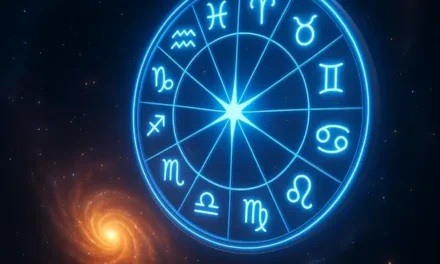
Divides the sky into zodiac signs and houses
-
Interprets these positions as symbols for personality, emotions, themes and life patterns
For example, a birth chart might say:
-
Someone with a strong Aries influence may be energetic, direct, and action-oriented.
-
Someone with a strong Cancer influence may be sensitive, caring and home-loving.
These are not scientifically proven laws. They are patterns and symbols that people use to reflect on life.
Real-life analogy:
Think about a story or movie that you love.
The hero may represent courage.
The guide or mentor may represent wisdom.
The villain may represent fear or selfishness.
These characters are symbols that help you understand parts of yourself and the world.
Astrology works in a similar way: planets and signs act like symbolic characters in the story of your life.
So we can say:
-
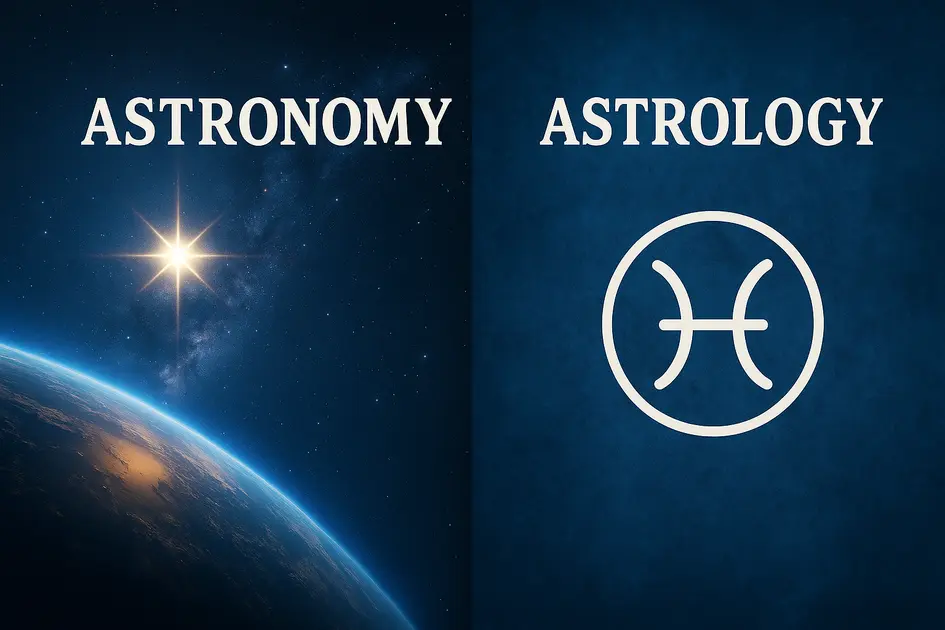
Astronomy asks: “What is this object in space? What is it made of?”
-
Astrology asks: “What can this object symbolize about our inner life and our experiences?”
Both use the same sky, but in different ways.
1.5 How astronomy and astrology share the same roots
Even though modern astronomy and astrology are very different, they came from the same ancient practice:
-
Watching the sky carefully
-
Recording patterns
-
Making connections between the sky and life on Earth
Shared tools
Both astronomy and astrology use:
-
Ecliptic / zodiac belt – the path the Sun appears to move through in the sky
-
Positions of planets – for example, saying “Mars is in Leo” is a positional statement
-
Ephemeris – a table of planetary positions used by both astronomers and astrologers, but for different purposes
Different goals
However, their goals are not the same:
-
Astronomy wants accurate physical information (distance, mass, composition, orbit).
-
Astrology wants symbolic meaning and interpretation (personality traits, life themes, emotional patterns).
Analogy:
Think of a music sheet and a song in your heart.
The music sheet is like astronomy – notes, timing, structure.
The feeling you get when you listen to the song is like astrology – emotions, memories, meaning.
Both are connected: without the notes, the song cannot exist.
Without the feeling, the notes are just dry symbols.
In the same way, astronomy provides the precise positions, and astrology uses those positions as a starting point for meaning.
1.6 Is astrology scientific? A clear, honest view
For SEO and clarity, we should answer a question many people search:
“Is astrology a science?”
From a scientific point of view, astrology:
-
Does not follow the full scientific method in a strict way
-
Does not have strong repeatable experimental evidence that planetary positions cause specific events or traits
-
Is generally considered a belief system, symbolic system or a cultural and psychological tool, not a science
However, this does not mean astrology has no value.
It simply means:
-
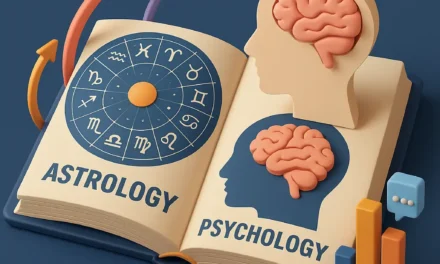
Astrology is part of culture, psychology, personal meaning and self-reflection, not part of physics, biology or astronomy.
Two kinds of “truth”
We can talk about two kinds of “truth”:
-
Scientific truth
-
Can be measured and tested
-
Works the same way everywhere
-
Example: Water boils at 100°C at sea level.
-
-
Symbolic or personal truth
-
Is about meaning, stories and inner experience
-
Different for different people
-
Example: A song that makes you cry may not affect another person in the same way.
-
Astrology lives mostly in the second type of truth.
Real-life analogy:
Your favourite childhood toy does not have “scientific power”, but it has emotional power for you.
It carries memories, comfort and meaning.
In the same way, astrology carries meaningful patterns and stories that help some people think about their life.
So when we say:
-
“Astrology is not a science,”
we mean: -
“It does not work like physics or chemistry.”
But when people say:
-
“Astrology helps me understand myself,”
they are talking about emotional and symbolic truth, not laboratory truth.
1.7 Using astrology in a science-friendly way
You can respect science and still use astrology in a balanced way.
Here is how:
-
Let astronomy be your guide for physical reality.
-
For questions like “What is Saturn made of?” or “How far is Mars?”, trust astronomy and physics.
-
-
Let astrology be a tool for reflection, not prediction guarantees.
-
Use horoscopes as journal prompts, not as strict rules.
-
Example: “Today’s horoscope says communication may bring change.”
-
You can think: “Where can better communication help me today?”
-
-
-
Do not replace medical or financial advice with astrology.
-
For health issues, see a doctor.
-
For investment decisions, use financial planning and research.
-
Astrology can support your emotional clarity, but not replace professional expertise.
-
-
See astrology as a symbolic language of patterns.
-
Like art, poetry or myth, it helps you talk about feelings and experiences.
-
Analogy:
Think of astrology as a mirror, and science as the light in the room.
Without light, the mirror is useless.
Without a mirror, you do not see your own face easily.
Science shows the outer world clearly.
Astrology can help some people see their inner world a bit more clearly.
1.8 Real-life examples: How people naturally mix science and symbolism
Even people who say they “do not believe in astrology” often mix science and symbolism in everyday life.
Example 1: Weather and mood
-
The weather report is scientific: “It will rain today.”
-
Your reaction is symbolic: “Rain makes me feel peaceful. I will drink tea and read a book.”
Here, meteorology (science of weather) gives facts, and you create meaning.
Example 2: Time and rituals
-
The clock says: “It is 12:00 midnight.”
-
At New Year, we give that time a special meaning:
-
New beginnings
-
Resolutions
-
Hopes for the next year
-
The clock itself is just a machine, but we place symbolic meaning on certain times and dates.
Example 3: Birthdays
-
Scientifically, a birthday is simply the day you were born, plus one year.
-
Symbolically, we celebrate it with cakes, candles, wishes and parties.
It becomes a day for:-
Reflection
-
Gratitude
-
Personal meaning
-
In the same way:
-
Astronomy tells us: “The Sun appears in this part of the sky at this time of year.”
-
Astrology says: “We will use that position as a symbol for a certain personality style or life theme.”
So even in normal, modern life, people are always mixing:
-
Scientific facts (time, date, weather, biology)
-
Symbolic meaning (celebrations, feelings, stories)
Astrology simply takes this habit and builds a full system out of it.