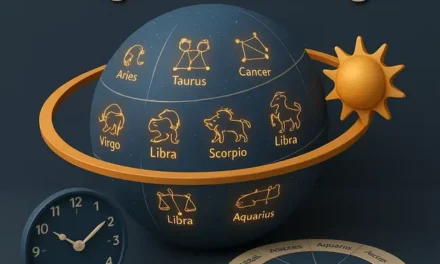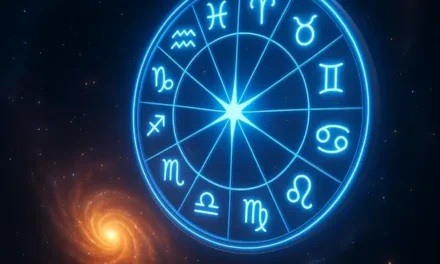
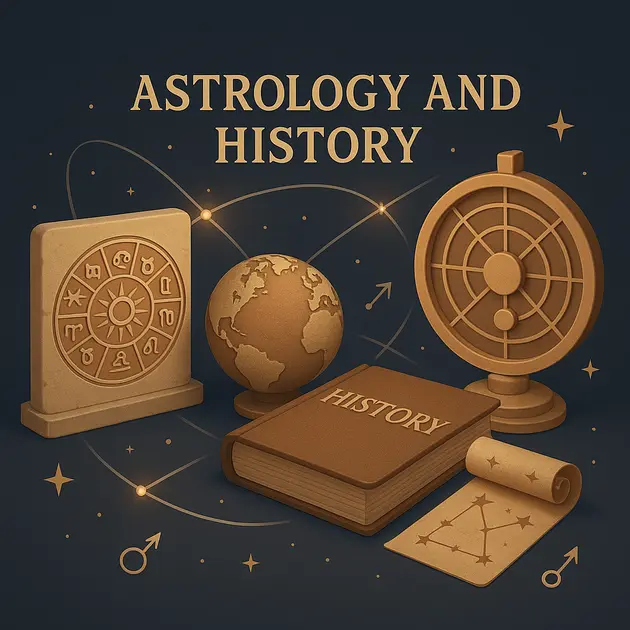
1. Introduction: Why Astrology Exists in Every Civilization
For thousands of years, human beings have looked at the sky and asked deeper questions:
- Why do the seasons change?
- Why do certain stars appear before rains or winter?
- Why do human personalities differ so much?
- Is there a connection between the heavens and human life?
This curiosity created the earliest forms of astronomy (sky measurement) and astrology (sky interpretation).
Every ancient civilization—Babylonian, Egyptian, Greek, Indian, Chinese, Mayan—developed its own form of astrology independently.
⭐ Analogy
Imagine humans everywhere discovering a mirror for the first time.
Everyone would find different uses for it:
- some would use it to fix their hair
- some to signal light
- some for decoration
- some for spiritual rituals
Similarly, all civilizations used the sky as a giant mirror, reflecting seasons, nature, and human behavior.
Astrology became humanity’s first:
- scientific calendar
- psychological model
- storytelling language
- agricultural guide
- cultural identity system
2. Why Astrology Began: The Scientific Foundation
Contrary to common belief, astrology did not start as superstition.
It started as early science, built on careful sky observation.
Ancient people noticed:
⭐ Patterns in the Sky → Patterns on Earth
- Rains came when certain stars rose
- Tides followed the Moon
- Heat increased when the Sun moved higher
- Animal behavior shifted with seasonal cycles
So they concluded:
“The sky influences life.”
or
“Heaven and Earth move together.”
⭐ Scientific Behaviors Astrology Used
Astrology was built on activities that today we consider scientific:
- precise measurement
- repeated observation
- pattern recognition
- early mathematics
- early calendars
- weather prediction
⭐ Analogy
Think of Google Maps:
- The map shows physical structure → astronomy
- The navigation instructions suggest meaning/action → astrology
Both use the same data but give different types of information.
3. Babylonian Astrology (3000–2000 BCE): The Birth of the Zodiac
The Oldest Recorded Astrology System
Babylon (ancient Mesopotamia) created:
- The first zodiac belt
- The first 12 zodiac signs
- The first ephemeris tables (planet positions)
- The 360° circle
- The 30° division of each zodiac sign
⭐ Why 12 Signs? Scientific Reason
Babylonians observed:
- 12 Moon cycles per year
- 12 major constellations along the ecliptic
To simplify calculations, they divided the ecliptic into 12 equal parts of 30° each.
⭐ Early Use
Babylonian astrology was used to:
- predict natural events
- guide kings
- prepare for war
- understand weather patterns
It was more national science than personal horoscope.
⭐ Analogy
Imagine a government using data to predict economy, rain, crops.
Babylonians used star data in the same way.
4. Egyptian Astrology (3000–1000 BCE): Decans, Sirius & Sacred Time
Egyptians added spiritual and mythological meanings to the sky.
⭐ Key Contributions
4.1 Decans → Groups of Stars Rising Every 10 Days
These were used for:
- calendars
- nighttime timekeeping
- predicting events
- magical rituals
4.2 Heliacal Rising of Sirius
Sirius rising before sunrise signaled:
- Nile flood season
- Start of the New Year
This linked astrology with agriculture and survival.
⭐ Analogy
Imagine a calendar where every month begins with a natural sign—like the first monsoon cloud. Egyptians used stars as season markers.
5. Greek & Hellenistic Astrology (600 BCE – 200 CE): Birth of Western Astrology
When Greek thinkers studied Babylonian and Egyptian astrology, they added:
- mathematics
- philosophy
- logic
- symbolic psychology
This became the foundation of modern Western astrology.
⭐ Major Greek Contributions
5.1 12 Houses
Representing major life areas:
- self
- money
- family
- creativity
- work
- relationships
- career
- spirituality
5.2 Planetary Rulership
Greeks assigned personality functions to planets:
- Sun → identity
- Moon → emotions
- Mercury → intellect
- Venus → love
- Mars → action
- Jupiter → growth
- Saturn → discipline
5.3 Elements & Modalities
Signs grouped by:
- Fire, Earth, Air, Water
- Cardinal, Fixed, Mutable
This brought a psychological dimension.
⭐ Ptolemy’s Tetrabiblos
The first scientific-style astrology textbook.
6. Indian (Vedic) Astrology (2500 BCE – Today): The Sidereal System
India’s Jyotish Shastra is one of the oldest, most mathematically precise astrology systems.
⭐ Key Features
6.1 Sidereal Zodiac (Star-Based)
Uses actual constellation positions, adjusting for Earth’s wobble (precession).
6.2 Nakshatras (27 Lunar Mansions)
Each represents:
- emotional patterns
- symbolic qualities
- life themes
6.3 Dashas (Planetary Periods)
Predict life cycles using time-based patterns.
6.4 Karma-Based Framework
Astrology connected with:
- reincarnation
- life purpose
- spiritual evolution
⭐ Scientific Strength
Vedic astronomers were the first to:
- calculate planetary periods with precision
- map lunar motion accurately
- predict eclipses reliably
7. Chinese Astrology (2000 BCE – Today): Energy Cycles & Personality Types
Chinese astrology is based on time cycles, not star positions.
⭐ System Structure
7.1 12-Year Animal Cycle
Rat → Ox → Tiger → Rabbit → … → Pig
Each representing personality tendencies.
7.2 Five Elements + Yin-Yang
Wood, Fire, Earth, Metal, Water.
Each year combines:
- one animal
- one element
- yin or yang quality
⭐ Areas of Use
Used for:
- health
- fortune
- compatibility
- business decisions
- feng shui
Analogy
Think of Chinese astrology as a weather forecast for your personal energy.
8. Mayan Astrology (2500–900 BCE): Galactic Timekeeping
The Maya created extremely precise astronomical calendars.
⭐ Key System: Tzolk’in (260-Day Cycle)**
Based on:
- 20 day-signs
- 13 tones
This formed 260 unique personality energies.
⭐ Scientific Precision
The Maya predicted:
- solar eclipses
- Venus cycles
- planetary synods
with accuracy rivaling modern scientists.
9. How Astronomy and Astrology Stayed Connected
⭐ Astronomy = physical measurement
⭐ Astrology = symbolic interpretation
Both come from the same ancient activity:
Observing the sky again and again until patterns become knowledge.
Over time:
- astronomy became science
- astrology became psychology + spirituality
Analogy
Astronomy is like reading a clock.
Astrology is like deciding what the time means for your day.
10. Why All Civilizations Created Astrology Independently
⭐ Reason 1: Survival
To know:
- when rains come
- when to plant crops
- when animals migrate
⭐ Reason 2: Social Order
Astrology helped predict:
- good times for war
- marriage decisions
- leadership qualities
⭐ Reason 3: Human Nature
Astrology offered language for:
- personality
- emotions
- relationships
- purpose
Analogy
Different cultures created different cooking styles—but all needed food.
Similarly, every civilization created astrology—but each with unique flavor.
11. The Evolution of Astrology: From Kings to Individuals
Stage 1 — Observation
Tracking sky movements.
Stage 2 — Pattern Linking
Seeing connections with earthly events.
Stage 3 — Symbolism
Assigning meaning to planets, stars.
Stage 4 — Personal Horoscopes
Birth charts emerge.
Stage 5 — Psychology Tool
Used for:
- emotional understanding
- relationship insights
- personality typing
12. Astrology vs. Science: The Modern Perspective
Modern scientists say:
- astrology cannot be tested like physics
- no physical force links planets to personality
Correct.
But astrology survives because it describes symbolic truth, not physical truth.
⭐ Analogy
A song cannot be measured scientifically, but it can still move you deeply.
Astrology is emotional truth, not laboratory truth.
13. Why Astrology Still Matters Today
People use astrology for:
- self-awareness
- stress understanding
- relationship clarity
- emotional healing
- meaning-making
It complements modern psychology by helping people name experiences:
- “My Moon feels overwhelmed.”
- “Saturn is teaching me responsibility.”
- “Venus shows my love style.”
Astrology is a mirror, not a prediction machine.
14. Conclusion: Astrology as Humanity’s Shared Sky Story
Astrology is not just a belief system.
It is the shared history of human intelligence, built on:
- curiosity
- observation
- storytelling
- science
- psychology
- spirituality
Every civilization:
- looked up at the same stars
- saw patterns
- created meaning
- built systems
Astrology is the oldest form of human wisdom, blending the scientific sky with the emotional soul.
It remains relevant because it helps people understand:
- themselves
- others
- life cycles
- purpose
- change
- and the connection between the cosmos and human experience
1. What is the historical origin of astrology?
Astrology originated thousands of years ago when ancient civilizations like the Babylonians, Egyptians, and Indians observed the sky to track seasons, predict floods, guide kings, and understand human behavior. It began as a scientific observation system before evolving into symbolic interpretation.
2. Which civilization created the first zodiac system?
The Babylonians created the first 12-sign zodiac around 2,500–3,000 years ago. They divided the sky into 12 equal 30° sections along the ecliptic, giving birth to the zodiac we still use today.
3. Is astrology based on scientific astronomy?
Yes—its foundation is astronomical. Astrology uses:
the Sun’s path (ecliptic)
positions of planets
constellations
lunar cycles
However, the interpretations are symbolic, not scientific.
4. What is the difference between astrology and astronomy historically?
In ancient times, both were the same field.
Astronomy measured the sky; astrology interpreted its meaning.
Later, astronomy became a physical science, while astrology became a symbolic psychological system.
5. What is Vedic astrology and how is it different?
Vedic (Indian) astrology uses the sidereal zodiac, which aligns signs with actual constellations.
Western astrology uses the tropical zodiac, based on seasons.
Vedic astrology also includes nakshatras, dashas, and karma-based interpretation.
6. Why do different cultures have different astrology systems?
Because each civilization observed the sky from a different location, using its own calendar, mythology, and philosophical beliefs.
But all shared the same universal idea: the sky influences life on Earth.
7. Are zodiac signs historically linked to seasons?
Yes. In the tropical zodiac, signs originally matched seasonal changes (spring, summer, autumn, winter).
Example:
-
Aries → start of spring
-
Cancer → peak of summer
-
Libra → autumn balance
-
Capricorn → winter solstice