


 By
By Professional At-Home Skincare: How to Achieve a Studio Glow from Your Vanity
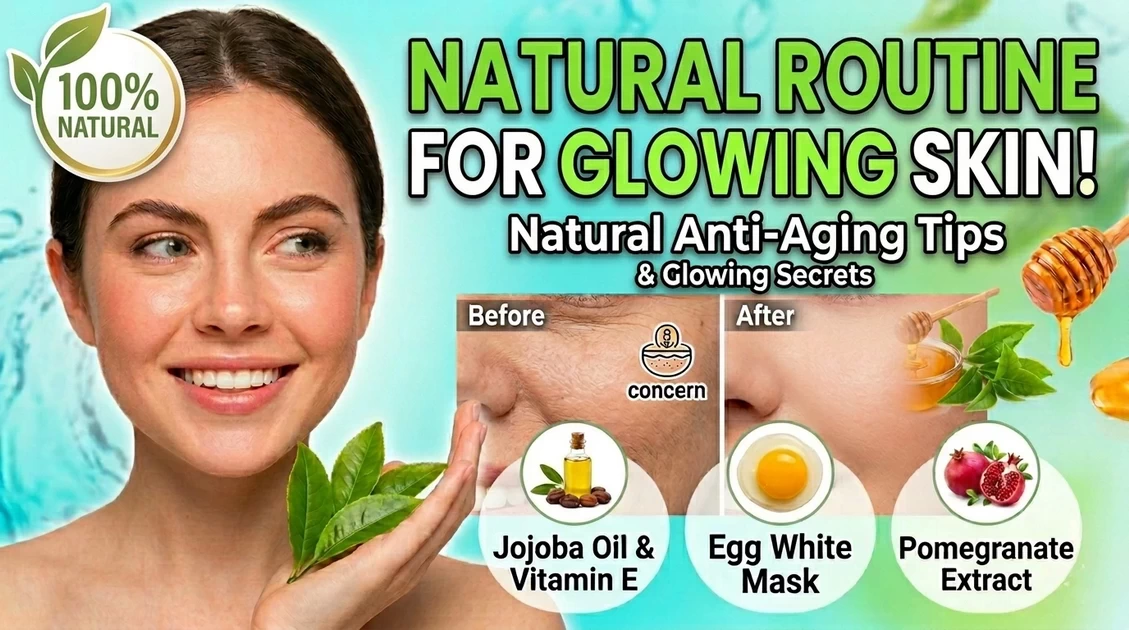
At home skincare routine is the key to achieving naturally glowing and healthy skin without expensive treatments. In this 2026 guide, you’ll learn simple steps, essential products, and expert techniques to build the perfect routine.
In a world of complex 10-step routines and expensive professional treatments, the most effective skincare often happens right in your own bathroom. Achieving healthy, radiant skin doesn’t require a medical degree; it requires consistency, the right order of operations, and a focus on your skin’s natural barrier.
Whether you are working from a home office or simply looking to refine your self-care ritual, here is a professional guide to mastering your at-home skincare.
1. The “Golden Order” of Application
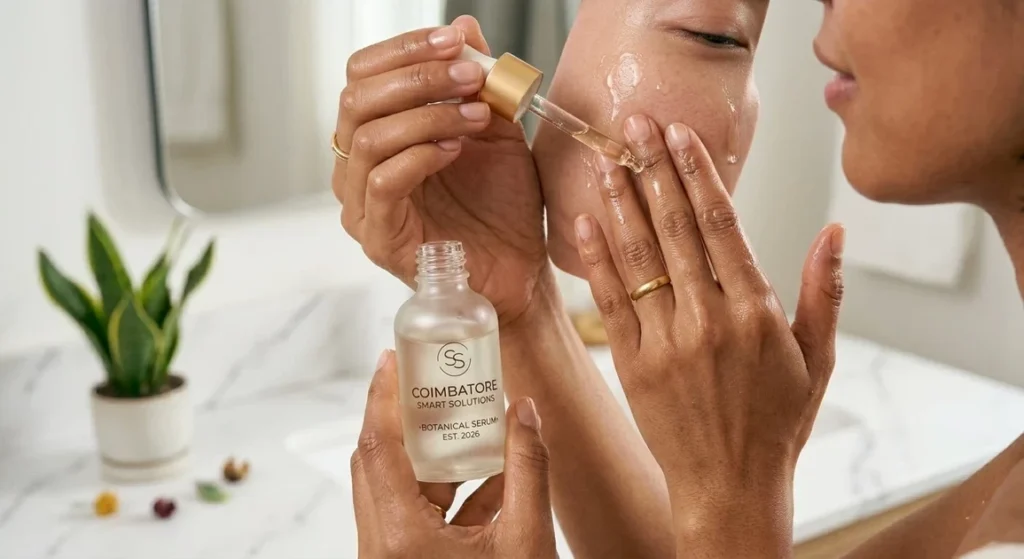
The effectiveness of your products depends entirely on the order in which you apply them. A simple rule of thumb is to go from thinnest to thickest consistency.
-
Morning: Cleanser → Toner/Mist → Antioxidant Serum (Vitamin C) → Moisturizer → SPF.
-
Evening: Double Cleanse (Oil then Water) → Treatment (Retinol or Acids) → Night Cream → Facial Oil.
-
Why it works: Applying a heavy cream before a light serum creates a physical block, preventing the active ingredients in the serum from ever reaching your skin cells.
2. The Power of the “Double Cleanse”
If you wear sunscreen or makeup, a single wash usually isn’t enough. Residual product can clog pores and lead to “maskne” or dullness.
-
The Method: Start with an oil-based cleanser or balm on dry skin to dissolve oil-based impurities. Follow up with a gentle water-based gel or cream cleanser to deep-clean the pores.
-
The Result: A perfectly clean canvas that allows your expensive serums to work twice as hard.
3. DIY Facial Massage (Lymphatic Drainage)
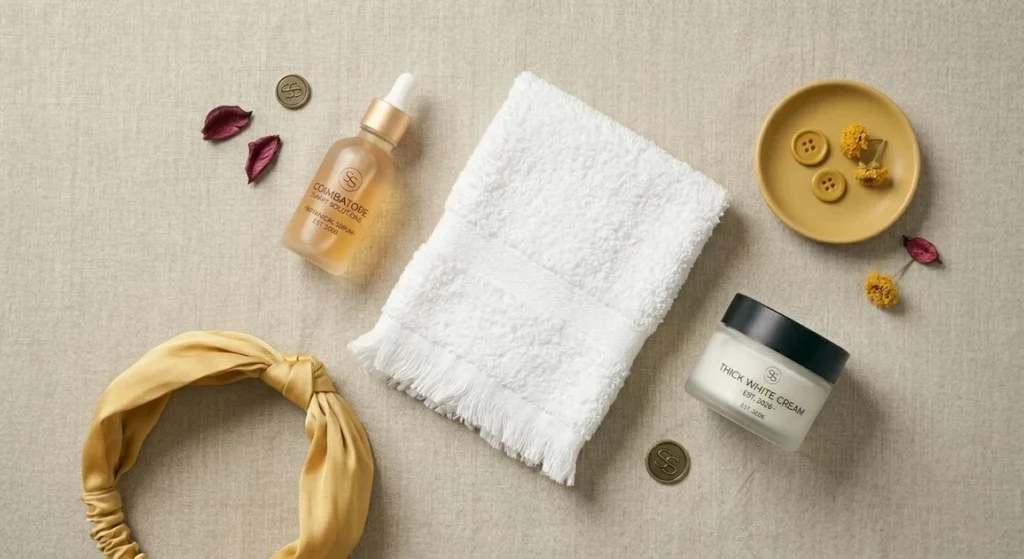
You can mimic the effects of a professional facial using just your hands or a simple tool like a Gua Sha.
-
The Tip: When applying your moisturizer or facial oil, use upward and outward strokes toward your ears and hairline.
-
The Benefit: This encourages lymphatic drainage, reducing puffiness (especially around the eyes) and improving blood circulation for a natural, temporary “lift.”
4. Temperature Control
The temperature of the water you use is just as important as the products you buy.
-
The Rule: Always use lukewarm water.
-
The Danger: Hot water strips away the natural oils that keep your skin supple, while ice-cold water can be shocking and less effective at breaking down oils.
5. Don’t Neglect the “Skincare Extension”
Your face doesn’t end at your jawline.
-
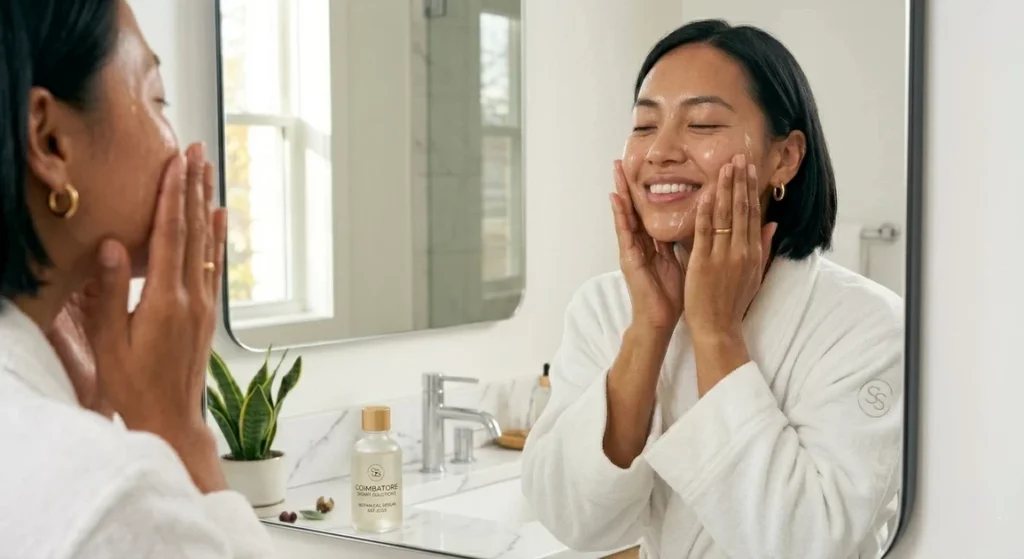
The Tip: Always carry your serums and moisturizers down to your neck and décolletage.
-
The Reasoning: The skin on your neck is thinner and has fewer oil glands, making it one of the first places to show signs of environmental aging.
Fall Skincare Transition: How to Reset and Protect Your Glow
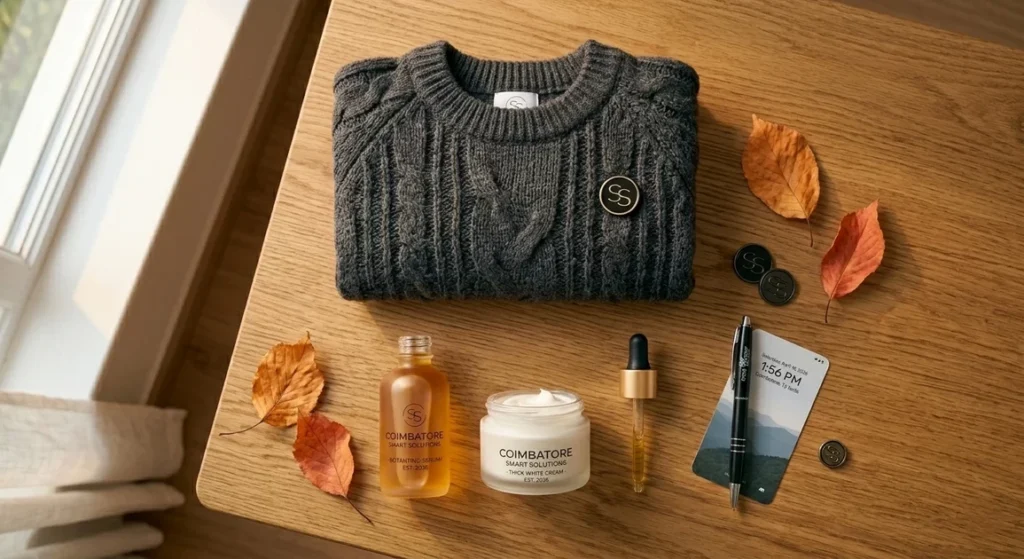
Autumn skincare routine is essential to protect your skin from dryness, dullness, and seasonal changes during the fall months.
As the humidity of summer fades into the crisp, cool air of fall, your skin undergoes a significant transition. The drop in temperature, combined with biting winds and the introduction of indoor heating, can lead to a weakened skin barrier, increased sensitivity, and “seasonal dullness.”
In the skincare world, fall is considered the “Repair and Prep” season. It is the time to heal summer sun damage and fortify your skin for the harsh winter ahead. Here is how to navigate the transition.
1. The “Hydration Anchor” Strategy
In summer, lightweight gels are enough. In the fall, you need products that act as an “anchor” to hold moisture in the skin as the air dries out.
-
The Tip: Transition to a lipid-rich moisturizer containing Ceramides and Fatty Acids.
-
Why it works: These ingredients mimic the skin’s natural oils, filling in the microscopic “cracks” in the skin barrier caused by cool air and low humidity.
2. Introduce “Gentle Brighteners”
Summer often leaves behind a souvenir in the form of hyperpigmentation or sunspots. Fall is the safest time to treat these.
-
The Tip: Incorporate Vitamin C or Niacinamide into your morning routine.
-
Why it works: These antioxidants help fade dark spots and even out skin tone. Because UV levels are slightly lower in autumn, your skin is less likely to experience the sensitivity sometimes associated with brightening actives.
3. Swap Physical Scrubs for Chemical Exfoliants
Cooler weather makes skin more prone to micro-tears from harsh physical scrubs.
-
The Tip: Use a gentle Lactic Acid or Mandelic Acid exfoliant once or twice a week.
-
Why it works: Alpha Hydroxy Acids (AHAs) like Lactic Acid are humectants—they dissolve dead skin cells while simultaneously drawing moisture into the skin, preventing the “flaky” look common in October and November.
4. Don’t Store Your SPF
A common mistake is thinking the sun is “gone” once the leaves change.
-
The Tip: Continue using a broad-spectrum SPF 30.
-
The Reasoning: UVA rays (the ones responsible for aging and collagen breakdown) are just as strong in the fall as they are in the summer. They penetrate through clouds and glass windows with ease.
5. Lip and Eye Care Focus
The skin around your eyes and on your lips is the thinnest on your body and has the fewest oil glands, making it the first to chap in the fall.
-
The Tip: Switch to a thick, petrolatum or beeswax-based lip balm and a richer eye cream at night.
-
Pro Tip: Apply your lip balm before you head outside to create a physical shield against the wind.
Professional-grade skin isn’t about the price tag; it’s about the process. By mastering the order of application, incorporating double cleansing, and treating your neck as an extension of your face, you can maintain a glowing, healthy complexion without ever leaving your home.
Looking for more insights? Read our full guide here
Fall Skincare Transition
Frequently Asked Questions (FAQ)
How long should I wait between steps?
You don’t need to wait minutes between every step. However, let your Vitamin C or Retinol sink in for about 60 seconds before applying moisturizer to ensure the “actives” aren’t diluted.
Can I mix my SPF with my foundation?
No. Mixing sunscreen with other products can break down the formula and create “holes” in your sun protection. Always apply your SPF as a dedicated layer and let it set for 2–3 minutes before applying makeup.
Can I still use Retinol in the fall?
Yes! Fall is actually the best time to start or increase your Retinol usage because you are less likely to have intense sun exposure, which can irritate Retinol-treated skin. Just ensure you are moisturizing heavily to offset any dryness.