Updated for 2026 – (A Safe, Sustainable & Realistic Guide)
Introduction: Why Beginners Need a Simple Routine
Many beginners start exercising with enthusiasm but stop within a few weeks.
The most common reasons are:
- Doing too much too soon
- Following complex routines
- Expecting fast results
- Feeling overwhelmed
A beginner workout routine should not be extreme.
It should be simple, repeatable, and safe.
This guide explains a beginner-friendly workout routine focused on healthy weight management, not quick fixes or unrealistic promises.
What Public-Health Guidance Commonly Emphasizes
Across widely accepted public-health recommendations, a few principles are consistent:
- Regular physical activity supports overall health
- Consistency matters more than intensity
- Beginners should progress gradually
- Movement habits are more important than perfection
Healthy weight management is a long-term process, not a short program.
What Does “Healthy Weight Management” Mean?
Healthy weight management focuses on:
- Staying active regularly
- Supporting overall fitness
- Building sustainable habits
- Avoiding extreme methods
It does not mean:
- Rapid weight loss
- Spot fat reduction
- Exhausting daily workouts
The goal is balance and consistency.
Components of a Beginner Workout Routine
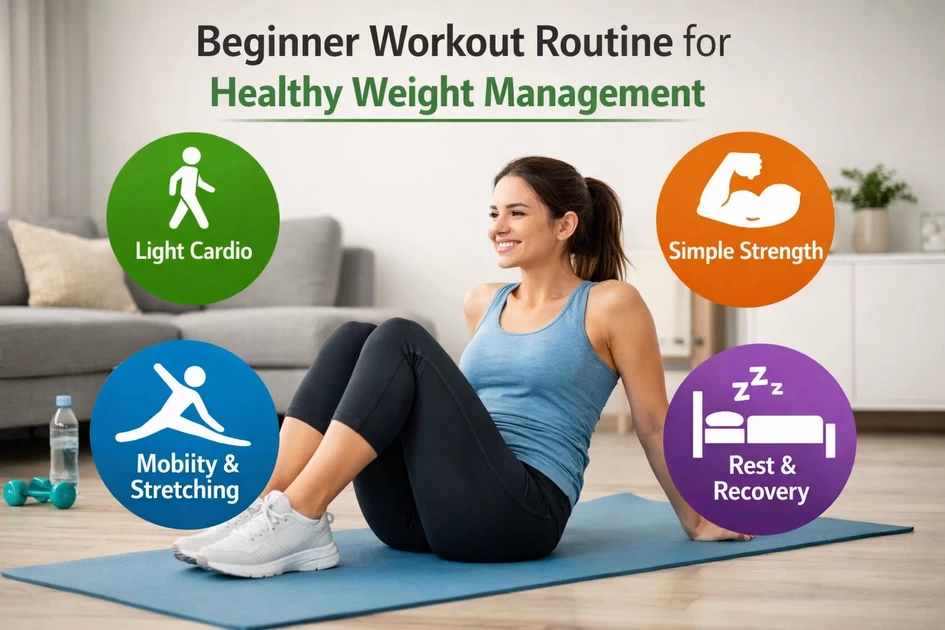
A balanced beginner routine usually includes:
1️⃣ Light cardio
2️⃣ Simple strength movements
3️⃣ Mobility and stretching
4️⃣ Rest and recovery
You don’t need all of these every day —
they work best together over time.
Step 1: Light Cardio for Beginners
Cardio supports daily movement and energy use.
Beginner-friendly options:
- Walking
- Brisk walking
- Gentle cycling
👉 If you’re confused about cardio choices, see:
Walking vs Running: Which Is Safer and Better for Beginners?
Start with what feels comfortable and increase gradually.
Step 2: Simple Strength Movements
Strength supports posture and daily activities.
Examples:
- Bodyweight squats
- Wall or knee push-ups
- Standing core engagement
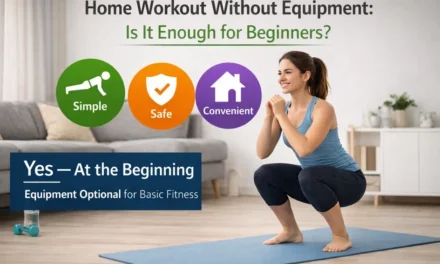
These movements can be done at home without equipment.
👉 Related guide:
Home Workout Without Equipment: Is It Enough for Beginners?
Step 3: Flexibility & Mobility
Mobility helps reduce stiffness and supports comfort.
Simple practices include:
- Gentle stretching
- Shoulder and neck movements
- Hip and back mobility
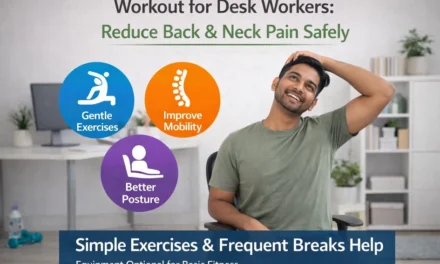
This is especially helpful for people who sit for long hours.
👉 Helpful read:
Workout for Desk Workers: Reduce Back & Neck Pain Safely
Step 4: Choosing Where to Work Out
Some beginners struggle with deciding where to exercise.
- Home workouts offer flexibility and comfort
- Gyms provide structure and equipment
👉 If you’re unsure, read:
Home Workout vs Gym: Which Is Better for Beginners?
Many beginners start at home and adjust later.
Sample Beginner Weekly Routine (Flexible)
This is an example structure, not a strict plan:
- Most days: Light cardio (walking)
- 2–3 days/week: Simple strength movements
- Daily: Short mobility or stretching
- Rest days: Light movement only
Adjust based on comfort and schedule.
How Often Should Beginners Exercise?
Commonly suggested guidance includes:
- Moving most days of the week
- Keeping sessions manageable
- Increasing duration gradually
Skipping occasionally is normal —
consistency over time matters more.
Optional Tools That Support Consistency
Some beginners find it easier to stay on track with:
- Fitness or habit-tracking apps
- Simple activity trackers
- Exercise mats
👉 Check beginner-friendly fitness tools here
(Affiliate links can be placed naturally)
What This Routine Will NOT Do
To keep expectations realistic:
- It will not cause rapid weight loss
- It will not replace medical advice
- It will not work without consistency
Healthy progress is slow and steady.
Final Recommendation
A beginner workout routine should:
- Feel manageable
- Fit your daily life
- Be safe and repeatable
Healthy weight management comes from regular movement, not extreme routines.
The best routine is the one you can maintain long-term.
Health Disclaimer
Disclaimer:
This article is for general informational purposes only and reflects widely accepted public-health guidance. It does not replace professional medical or fitness advice. Consult a qualified healthcare or fitness professional before starting any exercise routine.Yes. This routine focuses on simple, low-risk movements suitable for beginners.
Yes. Regular moderate activity and consistency are key factors in healthy weight management.
Beginners can follow this routine long term and adjust intensity gradually.
No. Many beginners manage fitness and weight with home workouts and daily movement.
Yes. Walking fits well as a core cardio activity for beginners.